1.1 God
God and the Infinite
1.1.1 God is the Supreme Intelligence, the First Cause of all things.
1.1.2 The infinite is that which has neither beginning nor end: the unknown. All that is unknown is infinite.
1.1.3 To say that God is the infinite would be an incomplete definition. Human speech is too impoverished and insufficient to define that which transcends human intelligence.
1.1.4 God is infinite in divine perfection, but the infinite itself is an abstract concept.
1.1.5 Thus, to say that God is the infinite is to replace the thing itself with one of its attributes; it is to define something unknown by referring to something else that is equally unknown.
Proofs of the Existence of God
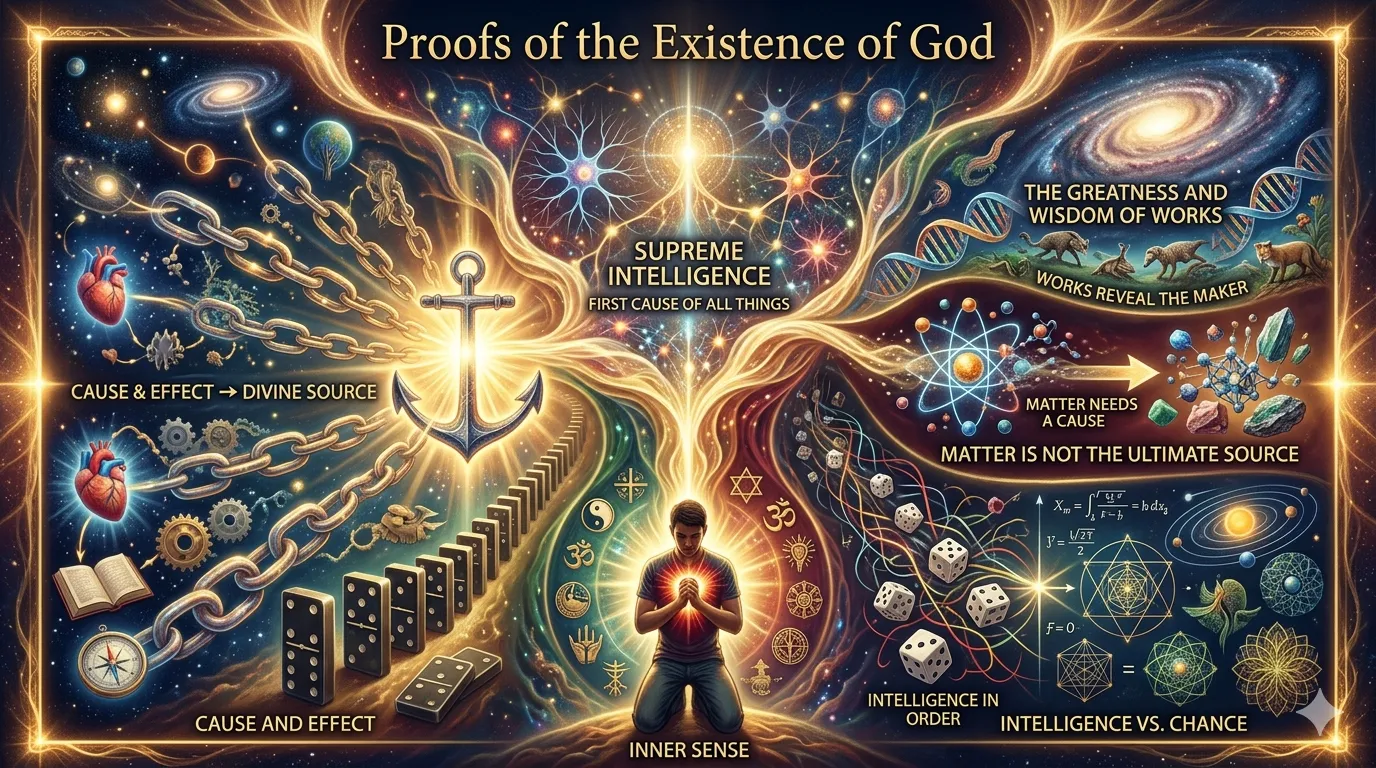
1.1.6 There is no effect without a cause. Since the universe exists, it must have a cause. To deny God, one would have to deny this basic principle and say that something can come from nothing.
1.1.7 Human beings also carry an inner sense that God exists. This feeling is too widespread to be explained only by teaching. Even where formal instruction is lacking, the idea of a Supreme Being appears again and again.
1.1.8 Some claim that matter itself is the first cause. But matter and its properties also need a cause. So matter cannot be the ultimate source of everything.
1.1.9 Others explain the universe by chance. But chance is blind. It cannot account for the order, balance, and harmony seen in creation. The laws of nature point to intelligence.
1.1.10 We know the first cause by its works. A work shows something about the one who made it. The greatness of the universe, and the wisdom seen in its order, point to an intelligence far above humanity.
1.1.11 Whatever name is used, that supreme source is the first cause of all things: a Supreme Intelligence above every other intelligence.
The Attributes of the Divinity
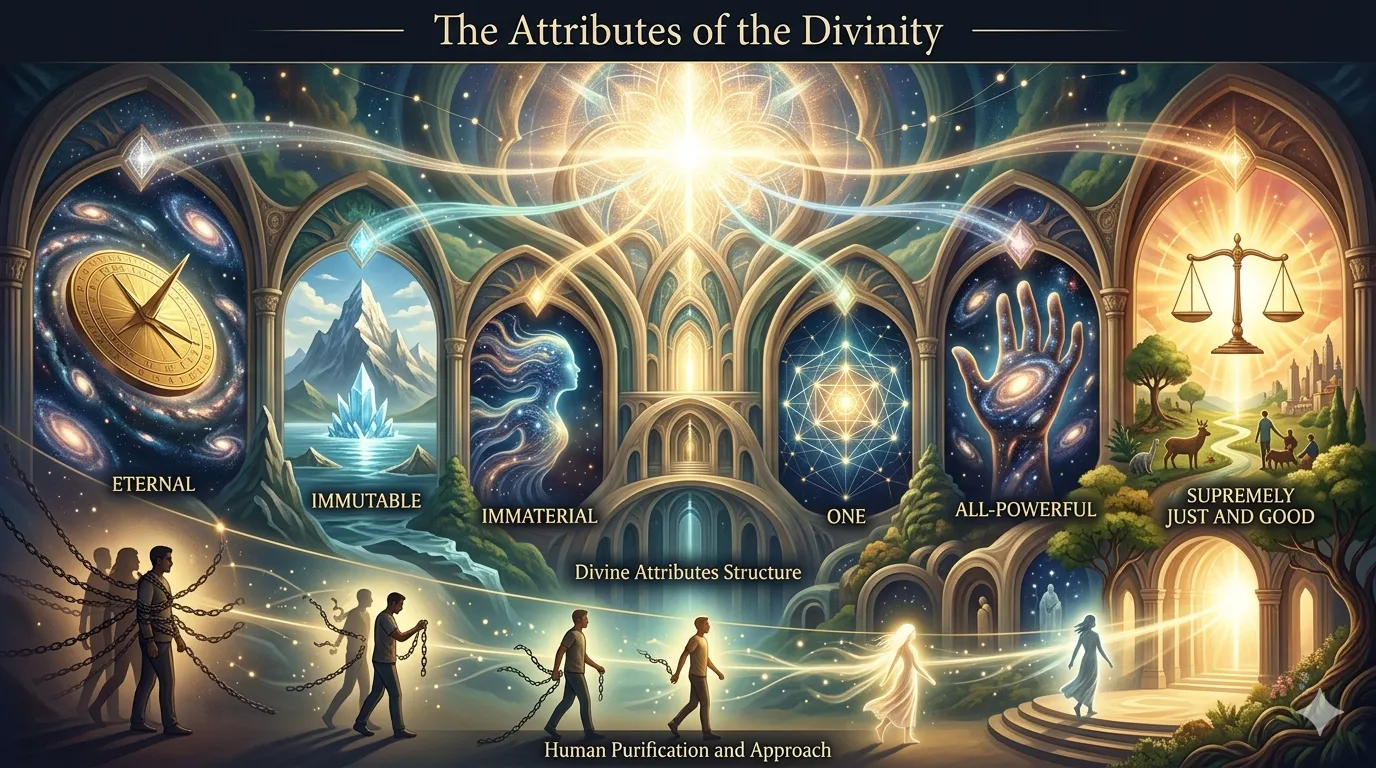
1.1.12 Human beings cannot fully understand the inner nature of God.
1.1.13 Our present abilities are limited while the spirit is still influenced by matter. As the spirit becomes purified, it can approach God more clearly, though never completely.
1.1.14 Even without grasping God’s essence, reason can recognize certain necessary divine perfections. When God is called eternal, immutable, immaterial, one, all-powerful, and supremely just and good, this gives a true human idea, though not full knowledge. If any of these qualities were lacking, God would not be supreme.
Eternal
1.1.15 God is eternal.
1.1.16 If God had a beginning, God would have come either from nothing or from some prior being. Neither is possible.
Immutable
1.1.17 God is immutable.
1.1.18 If God changed, the laws of the universe would not be stable. The order of creation requires a foundation that does not vary.
Immaterial
1.1.19 God is immaterial.
1.1.20 If God were material, God would be subject to change, and so would not be immutable.
One
1.1.21 God is one.
1.1.22 If there were many gods, there could not be one plan or one supreme power in the universe.
All-Powerful
1.1.23 God is all-powerful because God is one.
1.1.24 If God were not supreme in power, something else would be equal or greater.
Supremely Just and Good
1.1.25 God is supremely just and good.
1.1.26 The laws of existence show divine wisdom, justice, and goodness, which in creation are inseparable.
Pantheism
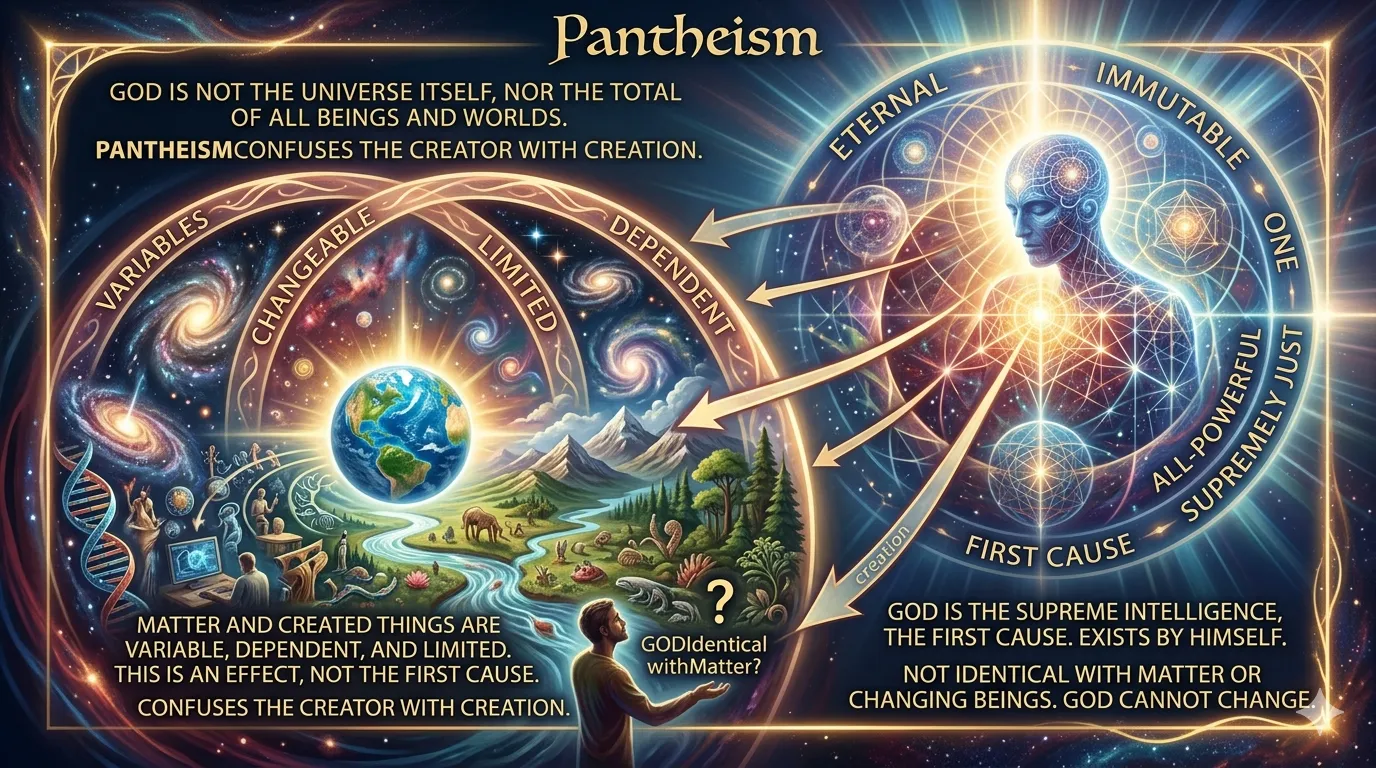
1.1.27 God is not the universe itself, nor the total of all beings and worlds.
1.1.28 If God were only the sum of created things, then God would be an effect rather than the first cause. God cannot be both cause and effect. The idea of God requires a being who exists by himself, not one produced by the universe.
1.1.29 Pantheism teaches that everything is God, and God is everything. Since human beings are unable to make themselves God, they would like at least to be a part of God. But this confuses the Creator with creation.
1.1.30 If God were identical with matter or with changing beings, then God would also change. But matter and created things are variable, dependent, and limited. So these properties cannot be assigned to God.
Creator and Creation
1.1.31 The difference between God and the universe is not just one of size or power. God belongs to a different order.
1.1.32 A machine is not the engineer who designed it. A painting is not the artist. In the same way, creation shows divine intelligence, wisdom, and power, but it is not God.
1.1.33 Pantheism contradicts the most essential divine attributes by confusing the Creator with the creature. Trying to go farther will not make us better; it will probably only add to pride.