3.4 Reproduction and the Continuation of Life
The Global Population
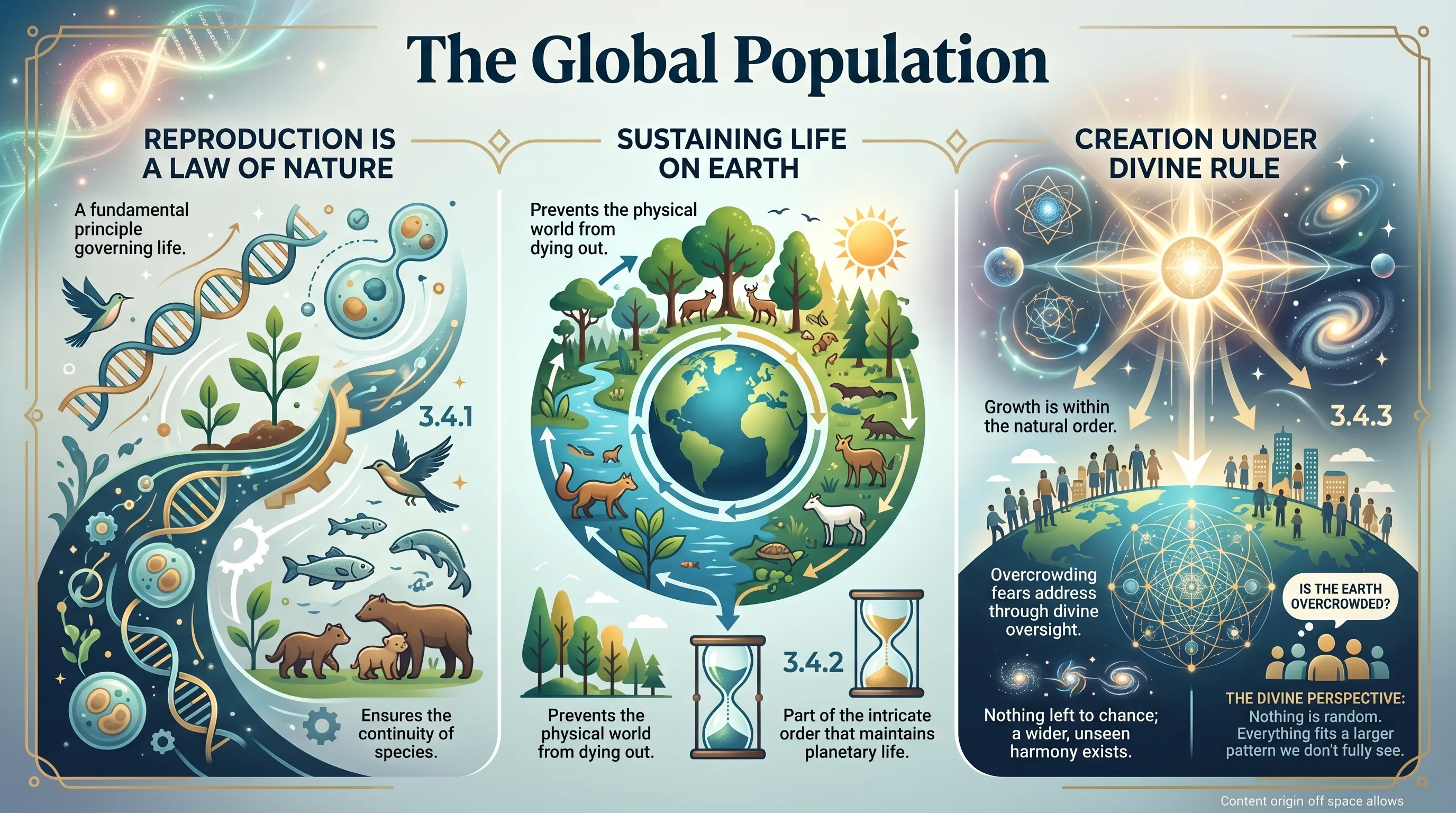
3.4.1 Reproduction is a law of nature.
3.4.2 Without it, the physical world would die out, since the continuation of living beings is part of the order that sustains life on earth.
3.4.3 The growth of population is also within that order. People may fear the earth will become overcrowded, but creation remains under divine rule. Nothing is left to chance, and what seems excessive to us often belongs to a wider harmony we do not fully see.
The Succession and Perfecting of the Races
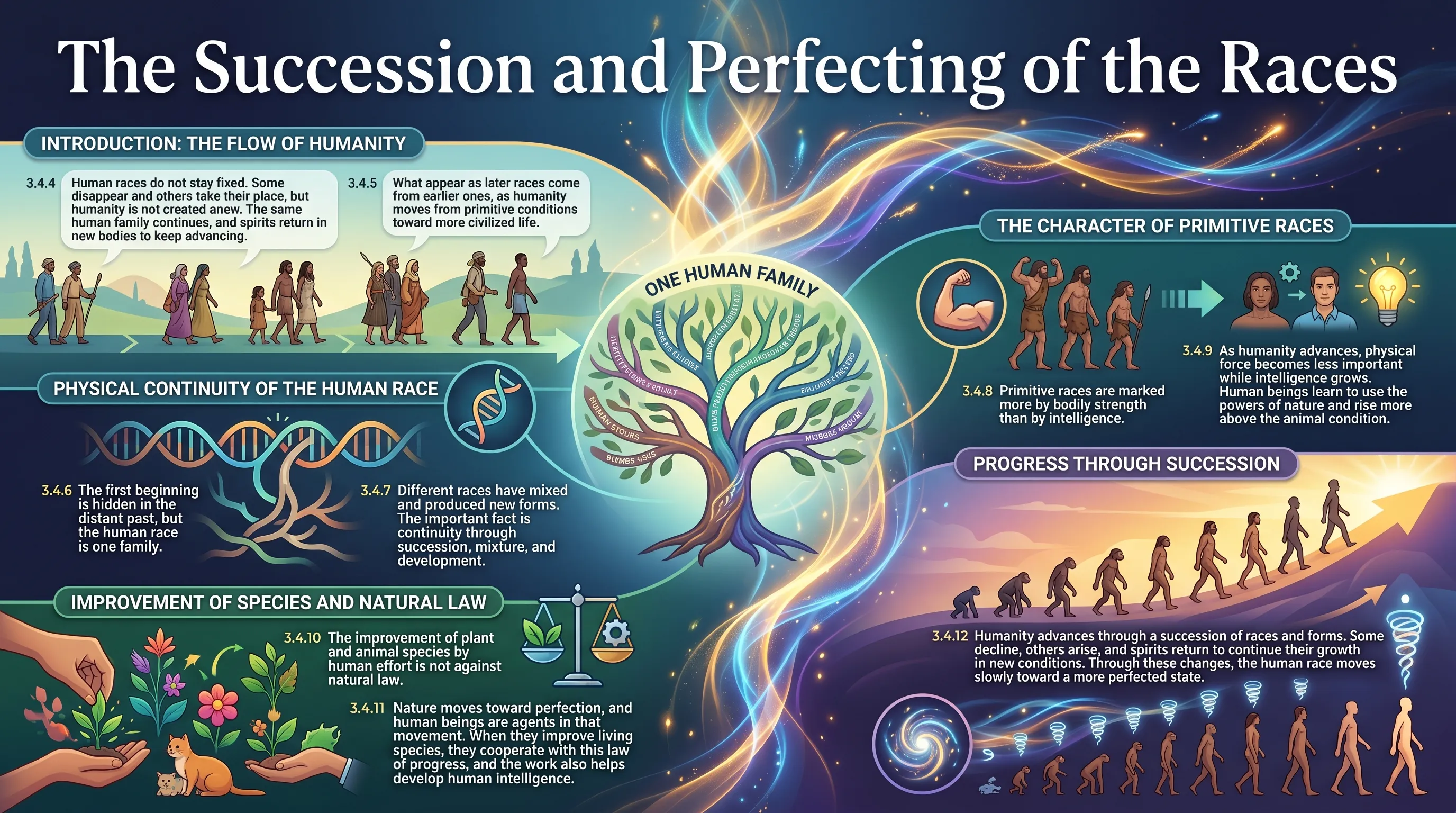
3.4.4 Human races do not stay fixed. Some disappear and others take their place, but humanity is not created anew each time. The same human family continues, and spirits return in new bodies to keep advancing.
3.4.5 What appear as later races come from earlier ones, as humanity moves from primitive conditions toward more civilized life.
Physical Continuity of the Human Race
3.4.6 The first beginning of humanity is hidden in the distant past, but the human race is one family.
3.4.7 Different races have mixed and produced new forms. The important fact is continuity through succession, mixture, and development.
The Character of Primitive Races
3.4.8 Primitive races are marked more by bodily strength than by intelligence.
3.4.9 As humanity advances, physical force becomes less important while intelligence grows. Human beings learn to use the powers of nature and rise more above the animal condition.
Improvement of Species and Natural Law
3.4.10 The improvement of plant and animal species by human effort is not against natural law.
3.4.11 Nature moves toward perfection, and human beings are agents in that movement. When they improve living species, they cooperate with this law of progress, and the work also helps develop human intelligence.
Progress Through Succession
3.4.12 Humanity advances through a succession of races and forms.
3.4.13 Some decline, others arise, and spirits return to continue their growth in new conditions. Through these changes, the human race moves slowly toward a more perfected state.
Obstacles to Reproduction
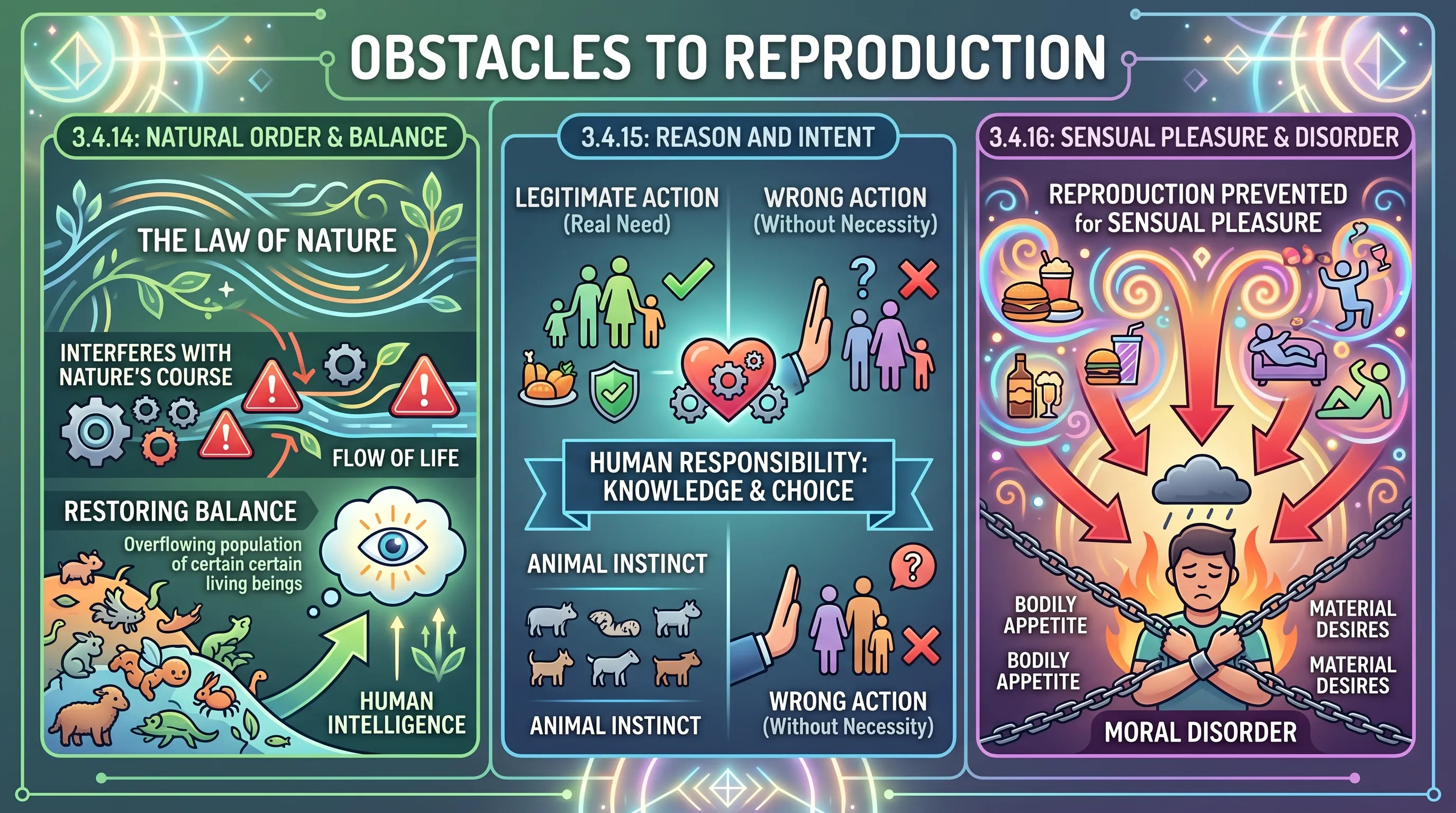
3.4.14 Any human law or custom that blocks reproduction goes against the law of nature when it interferes with nature’s normal course. Still, this does not forbid every kind of action. Some living beings, if they multiplied without limit, could become harmful, and in such cases human intelligence may act to restore balance.
3.4.15 What matters is the reason. Action is legitimate when it answers a real need, but wrong when reproduction is hindered without necessity. Humans are responsible for this in a special way, because they act with knowledge and choice, while animals help preserve balance only by instinct.
3.4.16 When reproduction is prevented only to satisfy sensual pleasure, it is a sign of moral disorder. It shows that bodily appetite has taken command and that the person is still too ruled by material desires.
Marriage and Celibacy
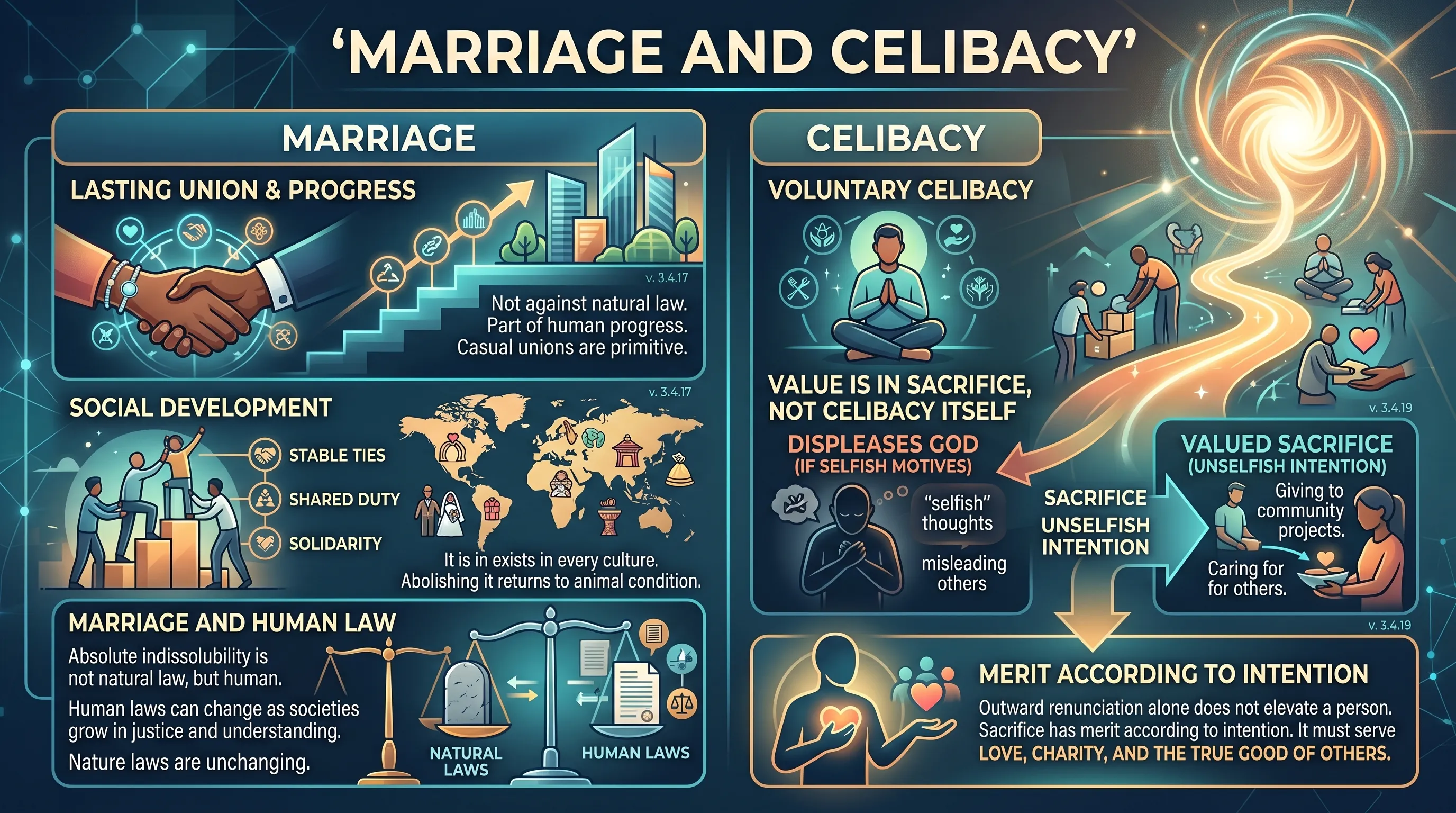
3.4.17 Marriage, as the lasting union of two people, is not against the law of nature. It belongs to human progress. Casual and passing unions reflect a more primitive state. Marriage marks social development by creating stable ties, shared duty, and solidarity. Though its forms vary, it exists in every culture. To abolish it would be a return to a more animal condition.
Marriage and Human Law
3.4.18 The absolute indissolubility of marriage is not a law of nature but a human law. Human laws can change as societies grow in justice and understanding. Only the laws of nature are unchanging.
Celibacy
3.4.19 Voluntary celibacy is not, by itself, a sign of perfection or something meritorious before God. If it comes from selfish motives, it displeases God and may mislead others. But when a person freely renounces family life to serve others more fully, the value lies not in celibacy itself, but in the sacrifice and unselfish intention behind it.
3.4.20 Any sacrifice for the good has merit according to its intention. Outward renunciation alone does not elevate a person. It has value only when it serves love, charity, and the true good of others.
Polygamy
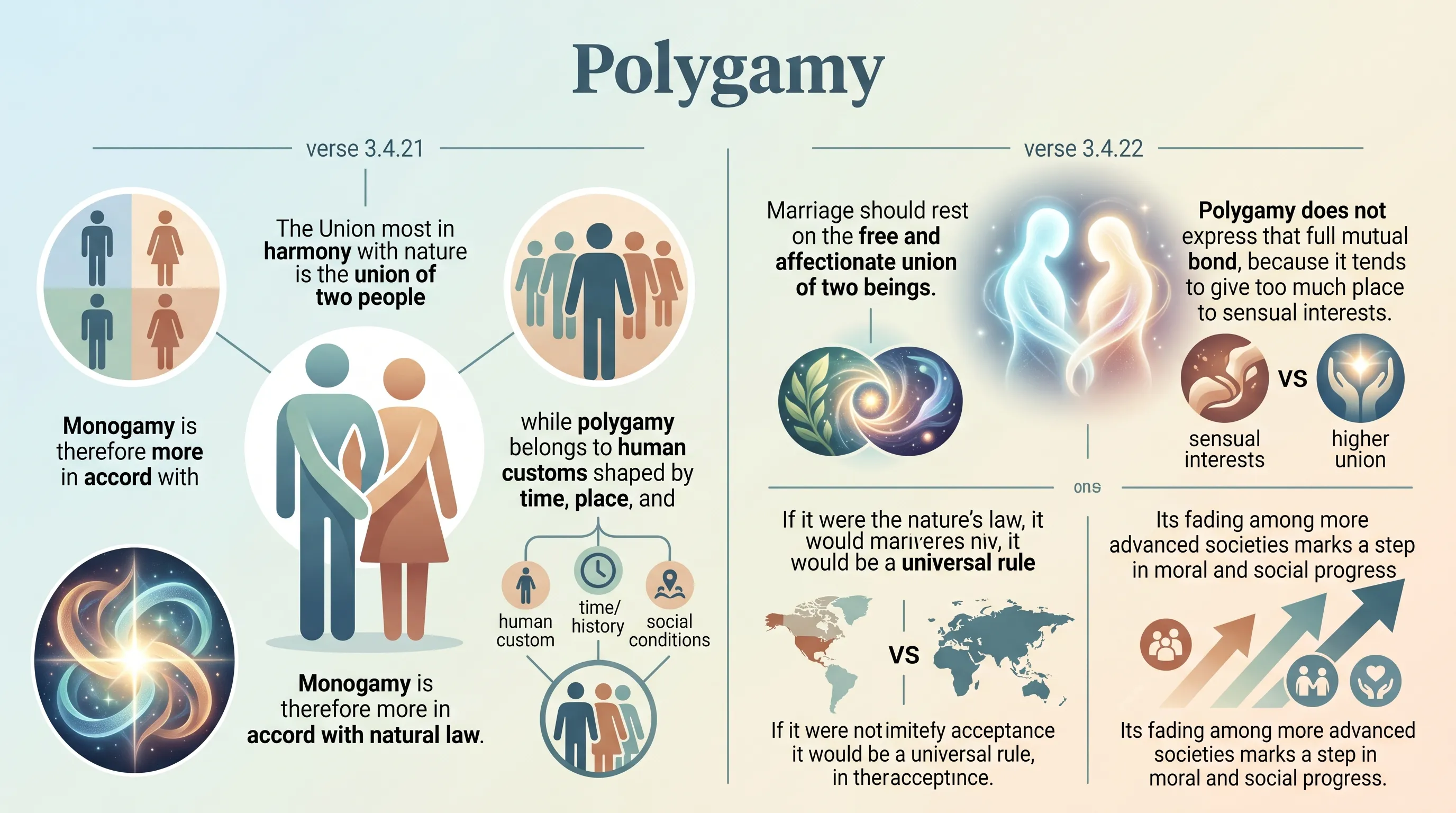
3.4.21 The nearly equal number of men and women shows that the union most in harmony with nature is the union of two people. Monogamy is therefore more in accord with natural law, while polygamy belongs to human customs shaped by time, place, and social conditions.
3.4.22 In the higher moral view, marriage should rest on the free and affectionate union of two beings. Polygamy does not express that full mutual bond, because it tends to give too much place to sensual interests. If it were truly part of nature’s law, it would be found everywhere as a universal rule. Its fading among more advanced societies marks a step in moral and social progress.