3.7 Life in Society
The Need for Societal Life
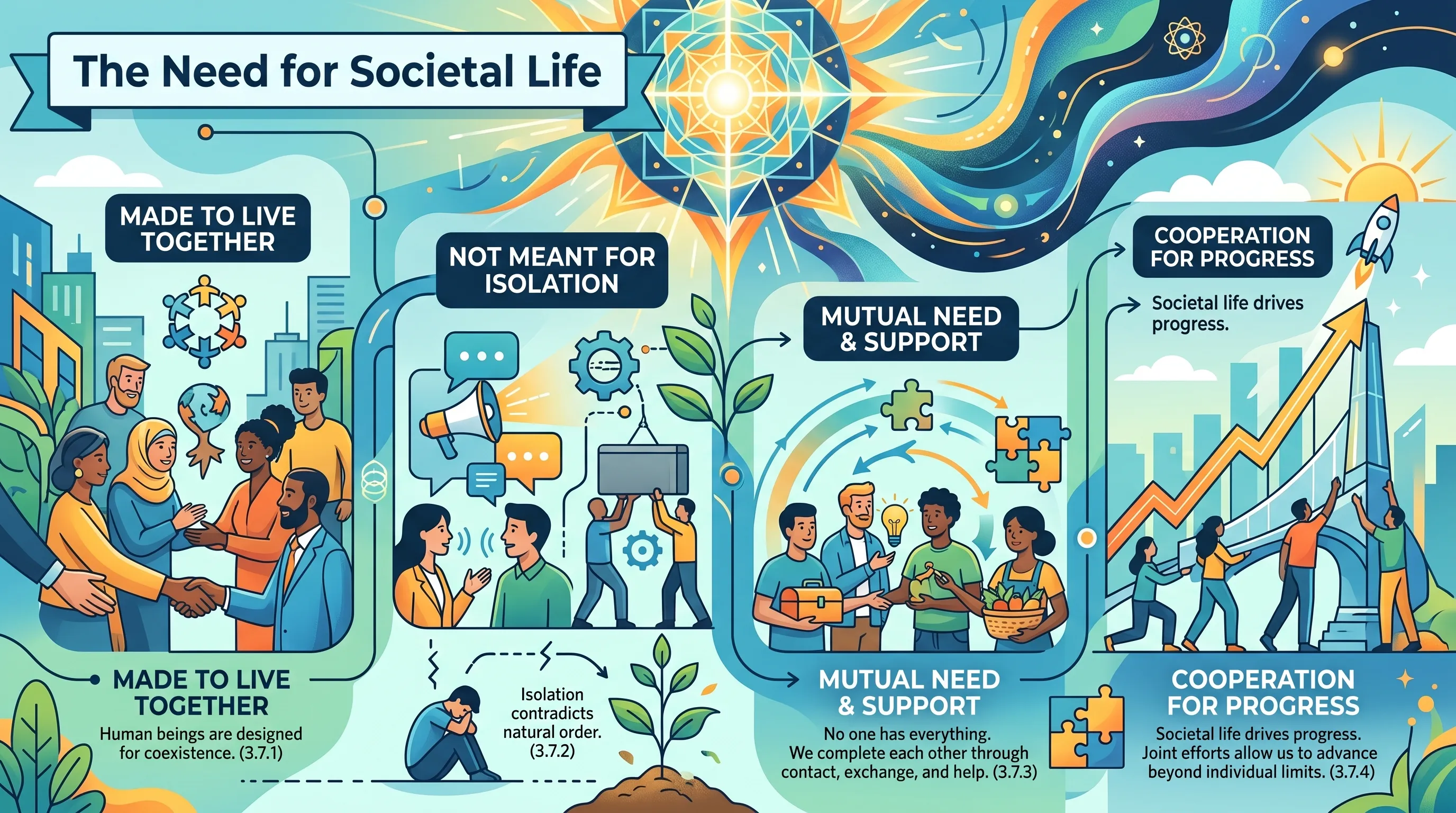
3.7.1 Human beings are made to live together.
3.7.2 Our powers of speech, understanding, and cooperation show that we are not meant for complete isolation. Living alone, cut off from everyone else, is against the law of nature.
3.7.3 People need one another. No one has every ability or all knowledge within themselves. What one person lacks, another can supply. Through contact, exchange, and mutual help, people support each other’s welfare and move forward together.
3.7.4 Societal life is therefore necessary for progress. By joining their efforts, human beings complete one another and advance in ways they could not if they remained alone.
The Life of Isolation. The Vow of Silence
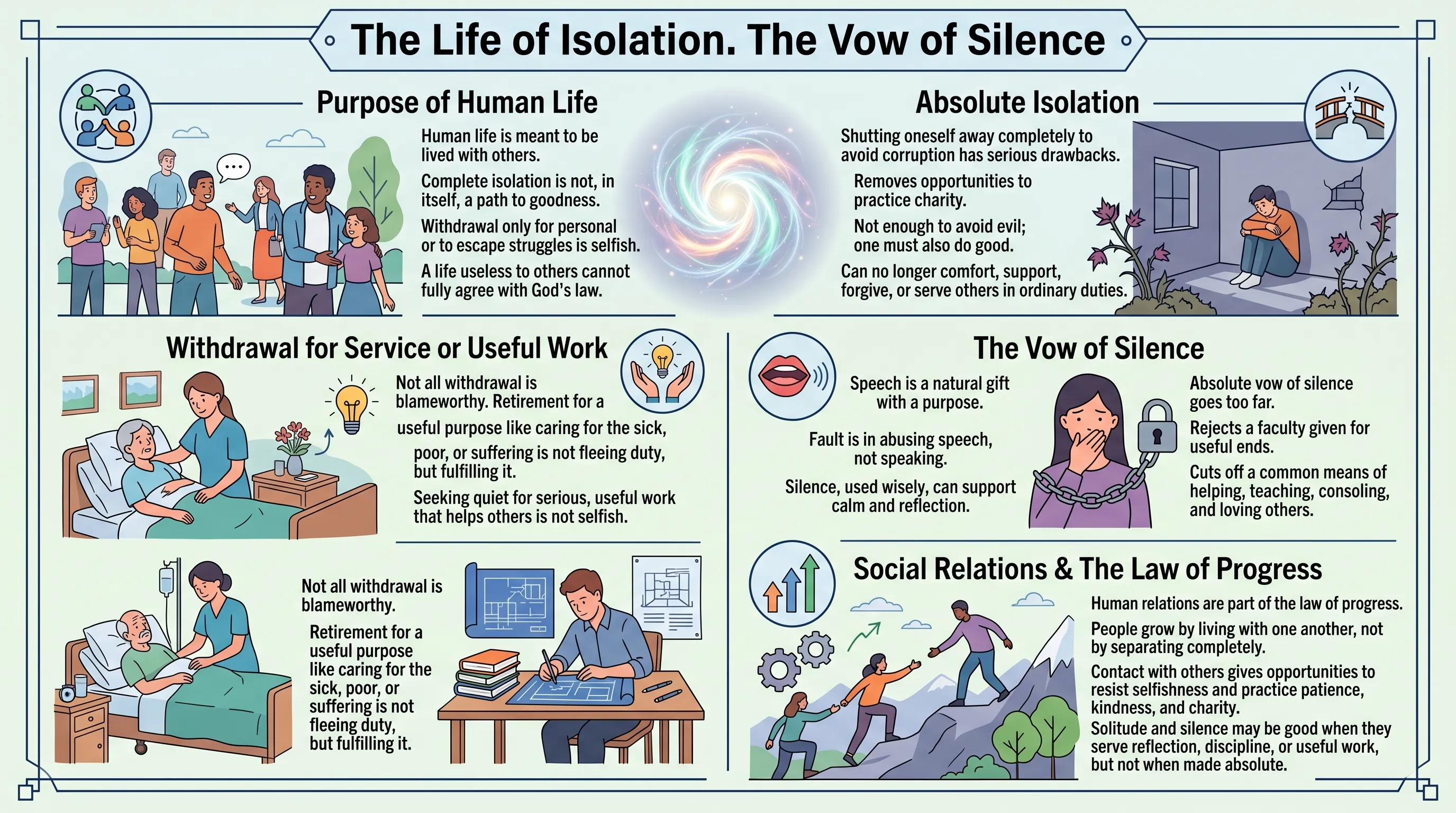
3.7.5 Human life is meant to be lived with others. Complete isolation is not, in itself, a path to goodness. When someone withdraws only for personal peace or to escape life’s struggles, it becomes selfish. A life useless to others cannot fully agree with God’s law.
Absolute Isolation
3.7.6 Shutting oneself away completely to avoid the world’s corruption has serious drawbacks. It may remove some temptations, but it also removes opportunities to practice charity. It is not enough to avoid evil; one must also do good.
3.7.7 A person who lives entirely alone can no longer comfort, support, forgive, or serve others in ordinary human duties.
Withdrawal for Service or Useful Work
3.7.8 Not every withdrawal from society is blameworthy. When people leave worldly pleasures to care for the sick, the poor, or the suffering, their retirement has a useful purpose. They are not fleeing duty but fulfilling it through charity.
3.7.9 The same is true of those who seek quiet in order to carry out serious and useful work. Solitude is not selfish when it helps them do good for others.
The Vow of Silence
3.7.10 Speech is a natural gift with a purpose. The fault is not in speaking, but in abusing speech. Silence, used wisely, can support calm and reflection.
3.7.11 But an absolute vow of silence goes too far. By refusing communication, a person rejects a faculty given for useful ends and cuts off a common means of helping, teaching, consoling, and loving others.
Social Relations and the Law of Progress
3.7.12 Human relations are part of the law of progress. People grow by living with one another, not by separating themselves completely. Contact with others gives opportunities to resist selfishness and practice patience, kindness, and charity.
3.7.13 So solitude and silence may be good when they serve reflection, discipline, or useful work. But when made absolute, they oppose the progress they are meant to support.
Family Ties
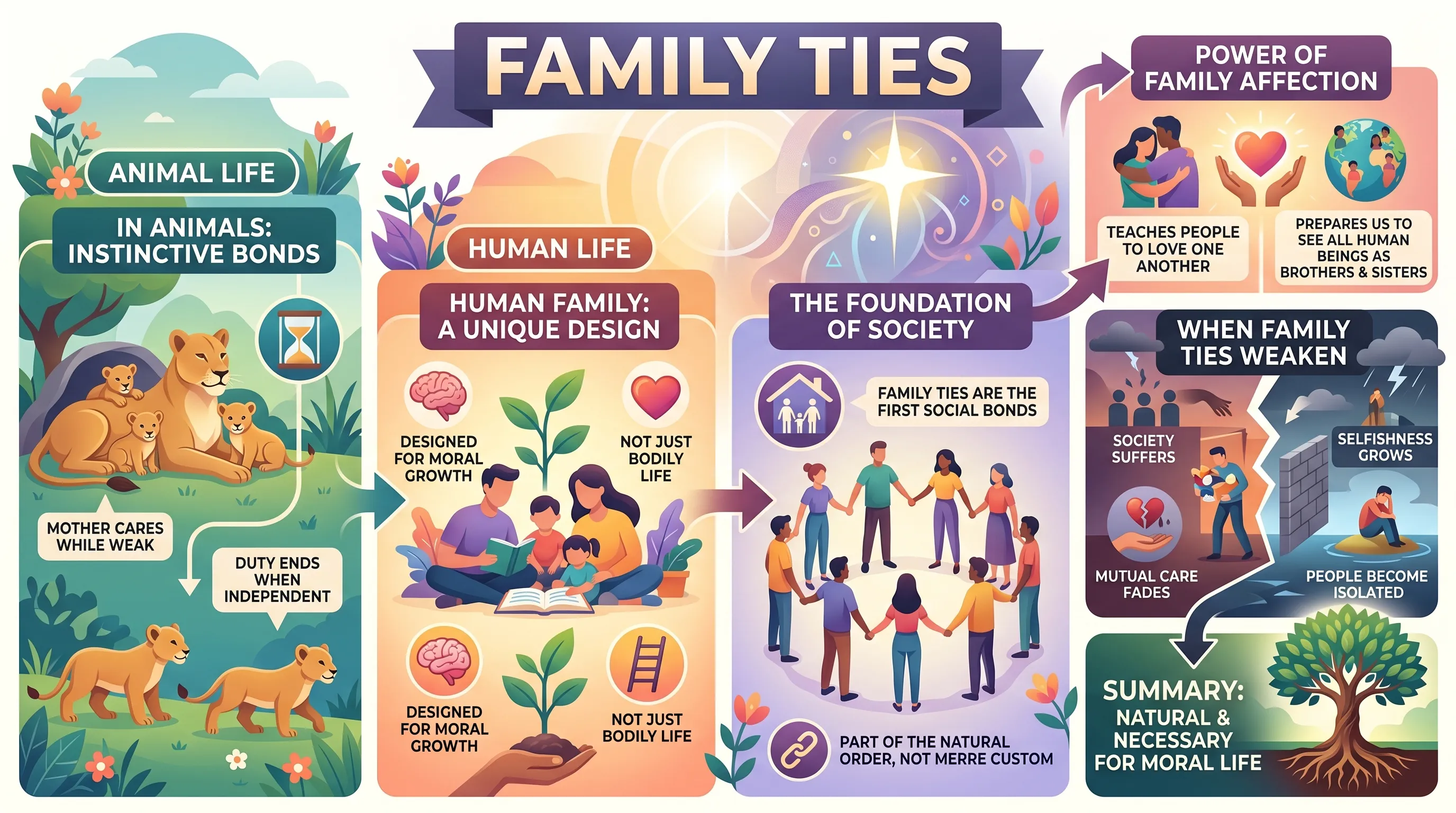
3.7.14 In animals, the bond between parents and young is mainly instinctive. The mother cares for them while they are weak, but when they can live on their own, that duty ends.
3.7.15 In human life, things are different. Human beings are made not only for bodily life, but also for moral growth and progress. So they cannot be judged only by comparison with animals.
3.7.16 That is why social ties are necessary, and family ties are the first of them. They are not mere custom, but part of the natural order.
3.7.17 Family affection does more than help children survive. It teaches people to love one another and prepares them to see all human beings as brothers and sisters.
3.7.18 When family ties weaken, society suffers. Selfishness grows, mutual care fades, and people become more isolated. Family ties are therefore natural and necessary for moral life.