2.10 The Work and Purpose of Spirits
Occupations and Missions of Spirits
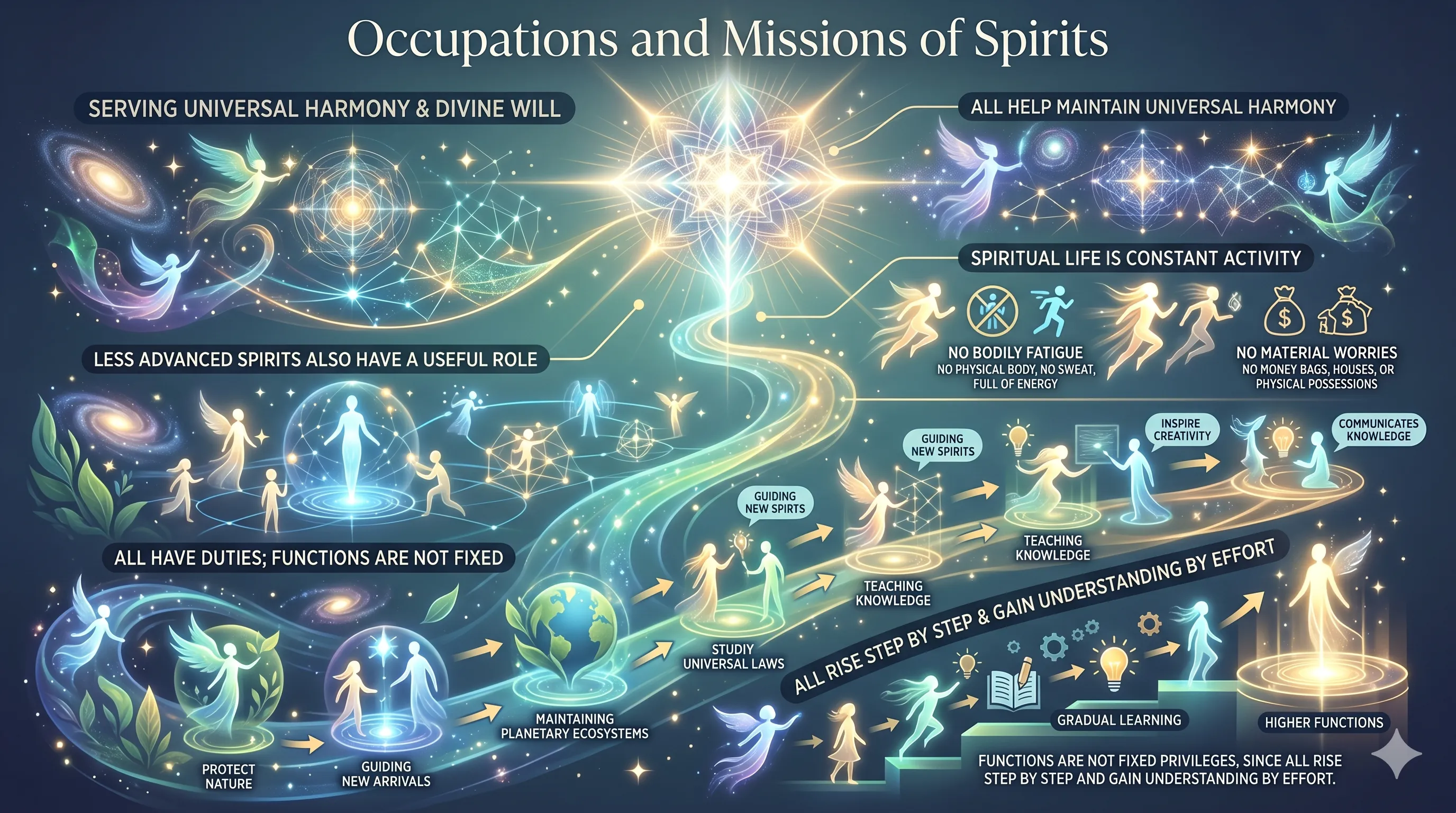
2.10.1 Spirits do not work only for their own improvement.
2.10.2 They also help maintain universal harmony and serve the divine will. Spiritual life is therefore one of constant activity, though without bodily fatigue or material worries.
2.10.3 Even the least advanced spirits have a useful role. All have duties, and no spirit keeps the same function forever. All pass through different conditions, learning gradually. Functions are not fixed privileges, since all rise step by step and gain understanding by effort.
Continuous Activity in the Spiritual Life
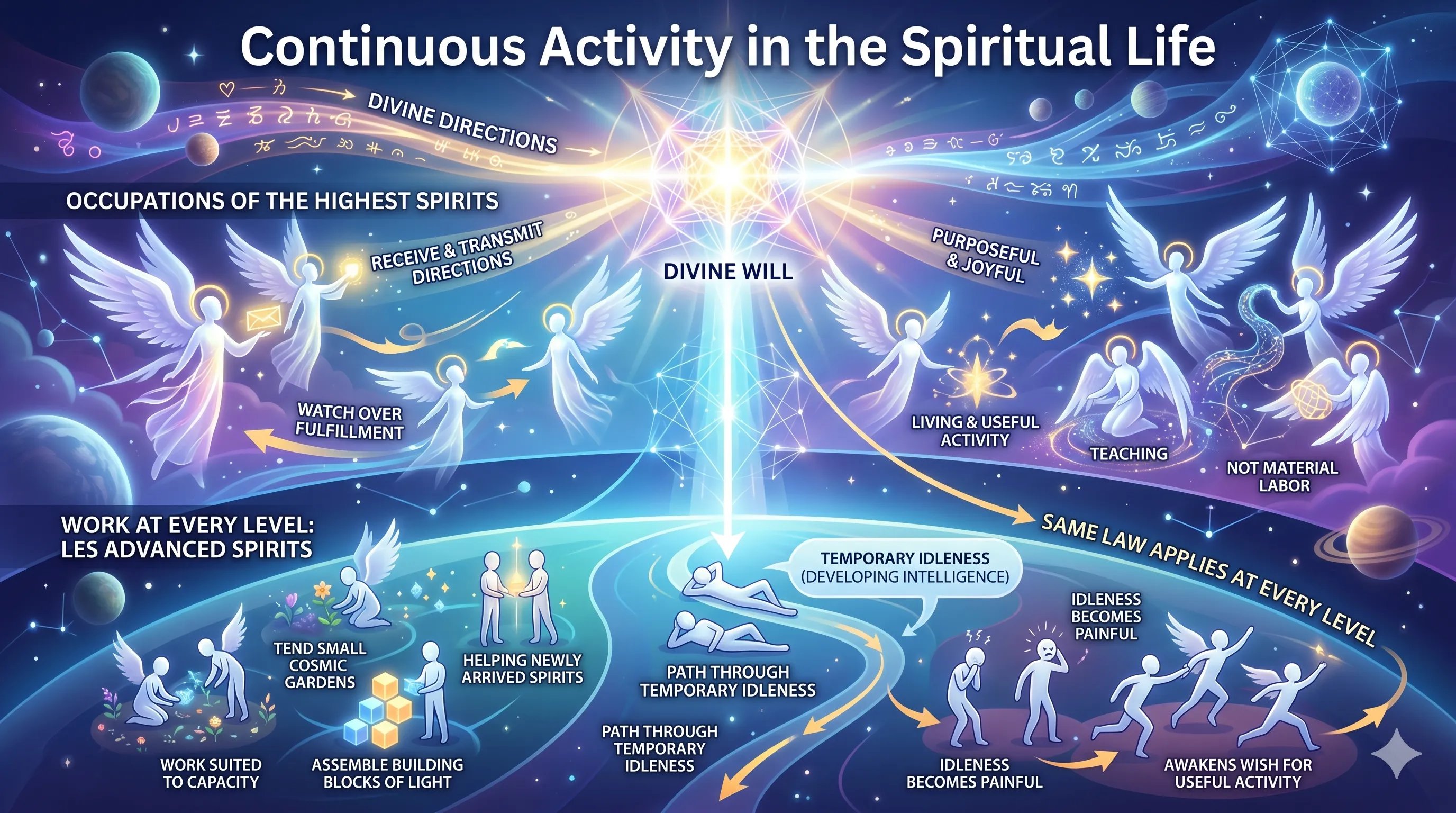
2.10.4 Even the highest spirits are not inactive.
2.10.5 Their occupations are purposeful and joyful. They receive divine directions, transmit them, and watch over their fulfillment. This is not material labor, but living and useful activity.
2.10.6 The same law applies at every level. Less advanced spirits also have work suited to their capacity. Some pass through temporary idleness, especially while their intelligence and will are still developing, but idleness eventually becomes painful and awakens the wish for useful activity.
Spirits and Human Works
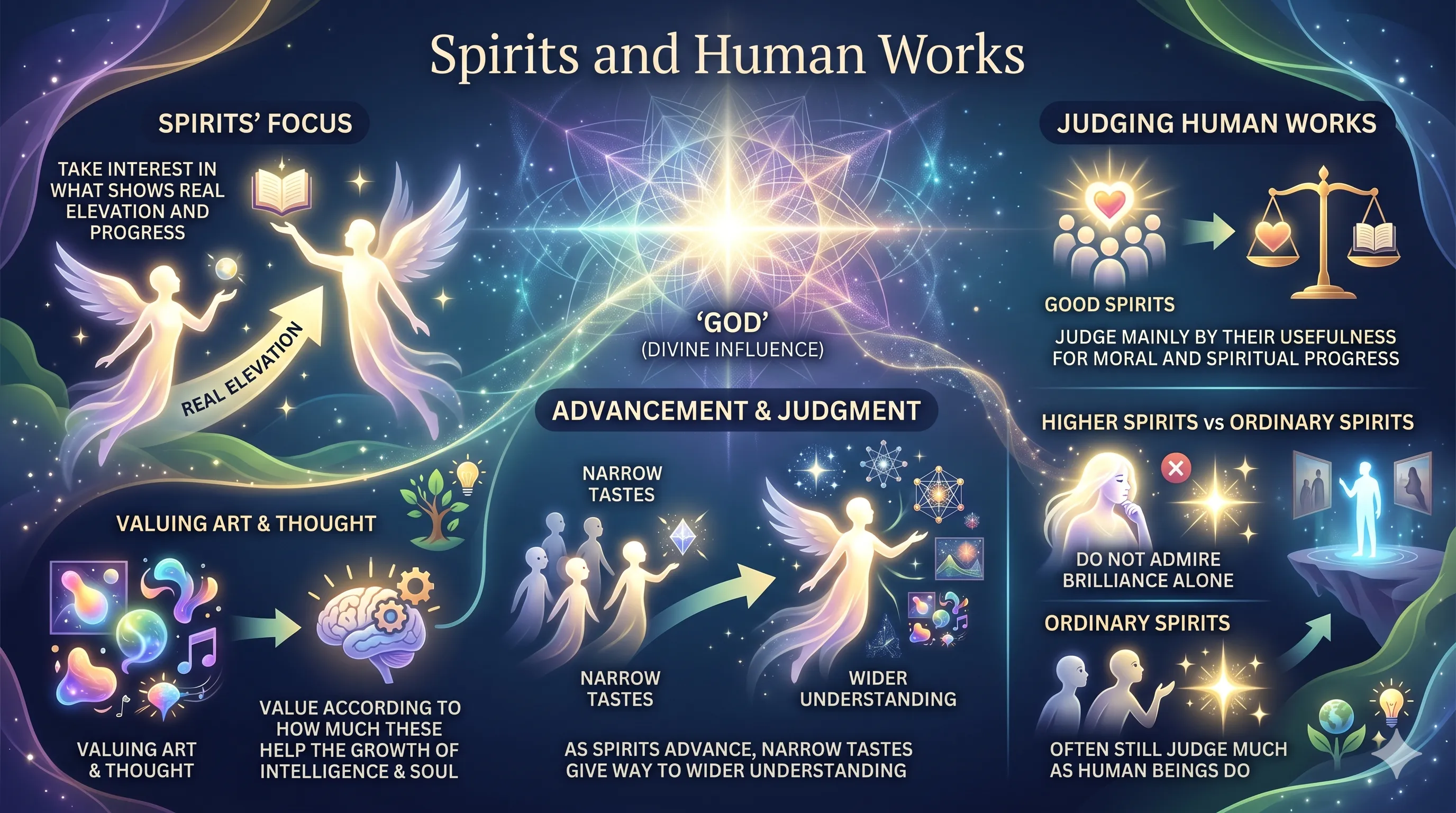
2.10.7 Spirits take interest in what shows real elevation and progress.
2.10.8 They value works of art and thought according to how much these help the growth of intelligence and soul. As spirits advance, narrow tastes give way to wider understanding.
2.10.9 Good spirits judge human works mainly by their usefulness for moral and spiritual progress. Higher spirits do not admire brilliance alone, while more ordinary spirits often still judge much as human beings do.
Spirits and Human Activity
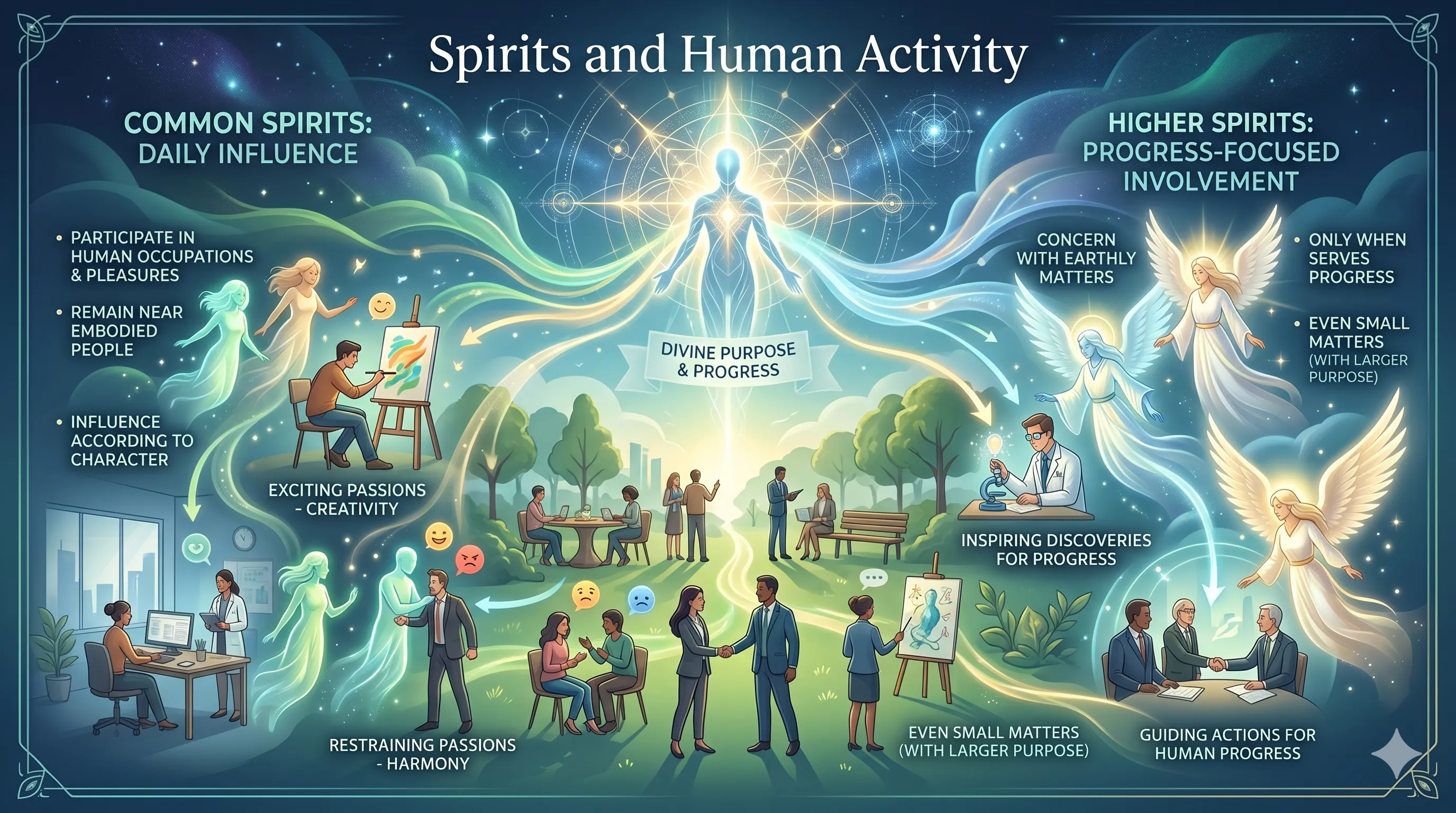
2.10.10 Common spirits often take part in human occupations and pleasures.
2.10.11 They remain near embodied people and may influence what people do according to their own character, sometimes exciting passions and sometimes restraining them. Higher spirits may also concern themselves with earthly matters, even small ones, but only when this serves progress.
Missions of Spirits
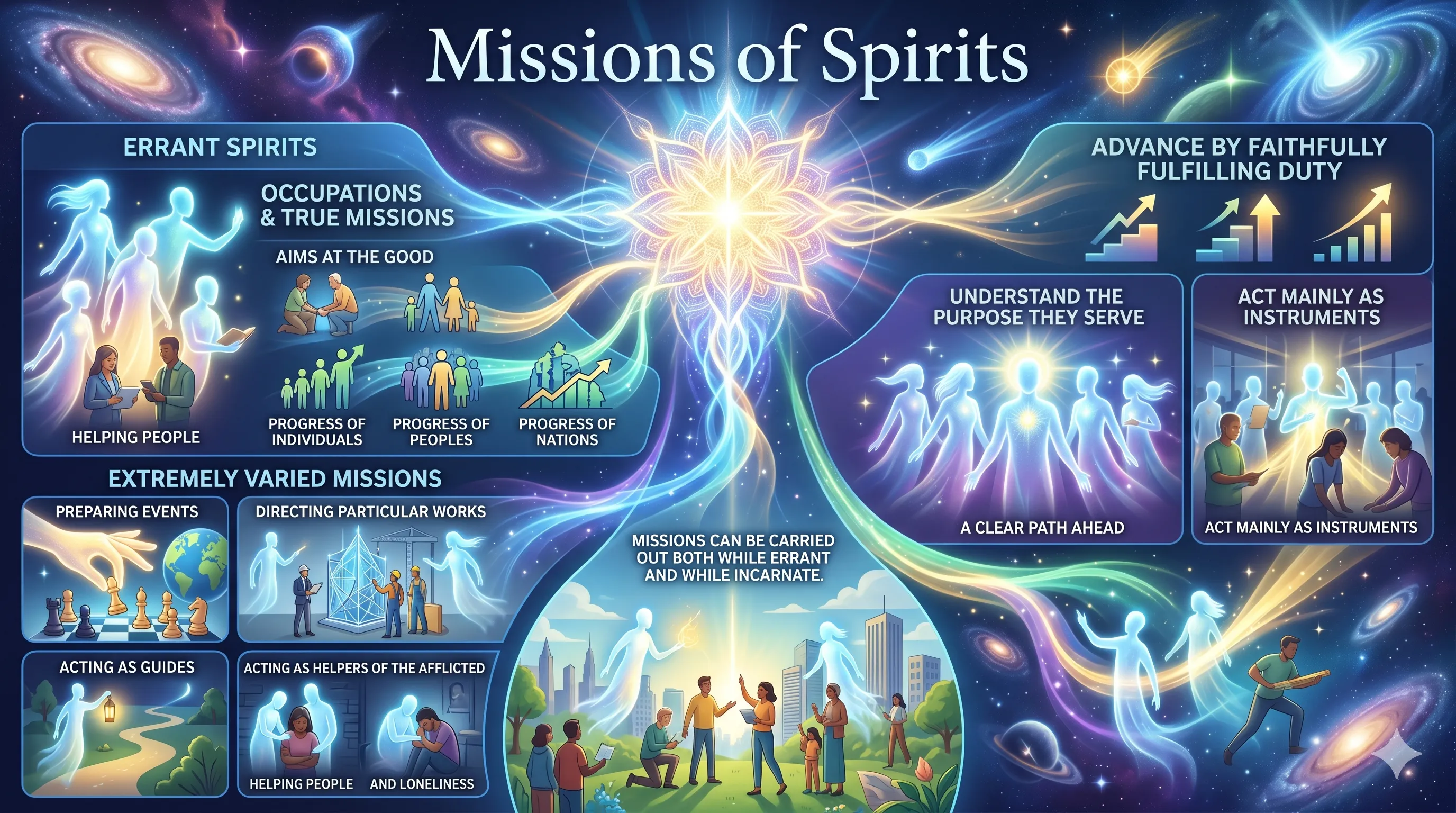
2.10.12 Spirits may carry out missions both while errant and while incarnate.
2.10.13 For errant spirits, missions are often a major occupation. These missions are extremely varied, but all true missions aim at the good. Spirits work for the progress of individuals, peoples, and nations. Some prepare events, some direct particular works, and others act as guides, protectors, or helpers of the afflicted.
2.10.14 A spirit advances by faithfully fulfilling its duty. Some understand clearly the purpose they serve, while others act mainly as instruments.
The Importance of Missions
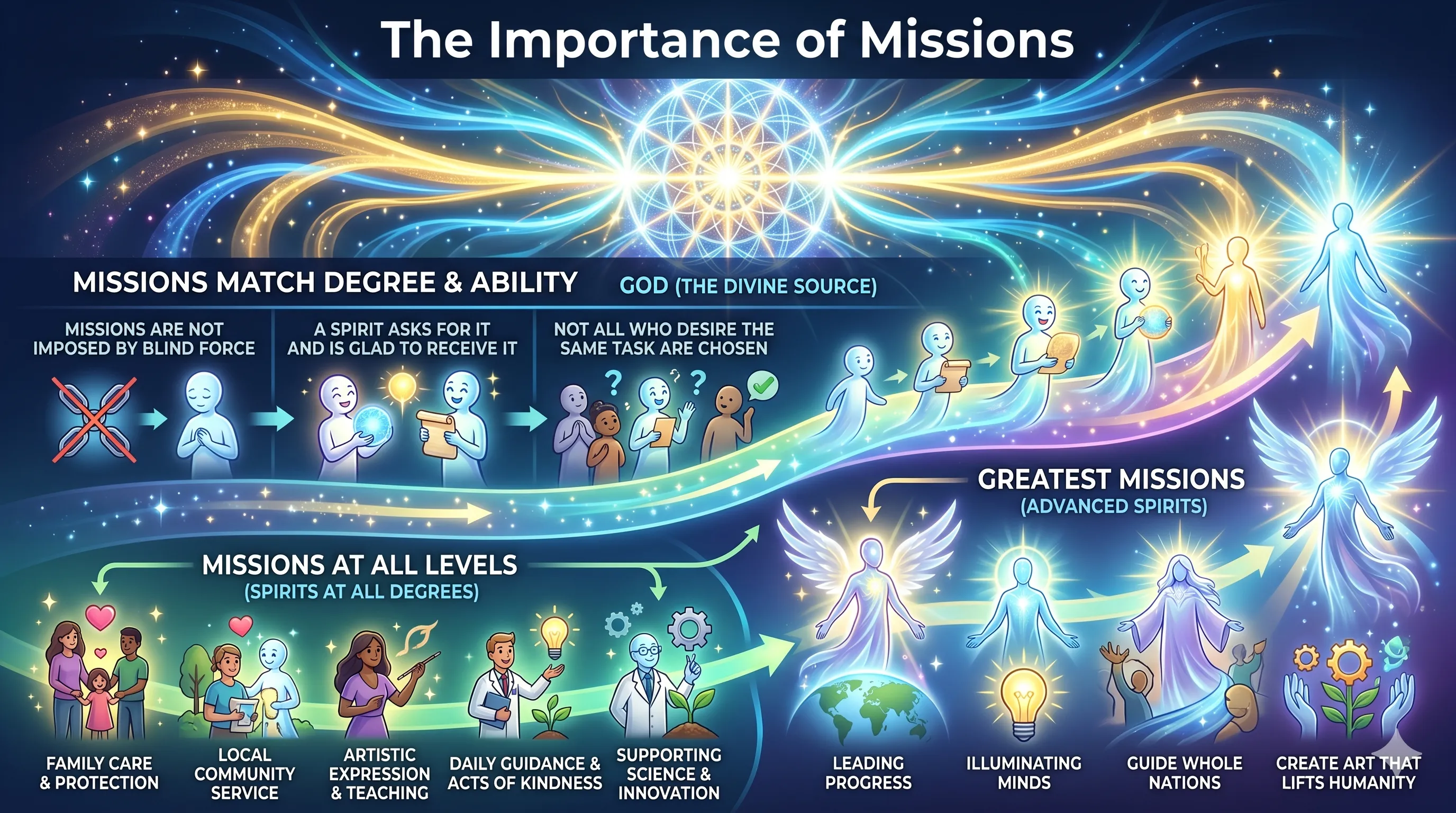
2.10.15 Only advanced spirits receive the greatest missions, but missions are not limited to them.
2.10.16 Their importance always matches the spirit’s degree and ability. A mission is not imposed by blind force. A spirit asks for it and is glad to receive it, though not all who desire the same task are chosen.
The Mission of Incarnate Spirits
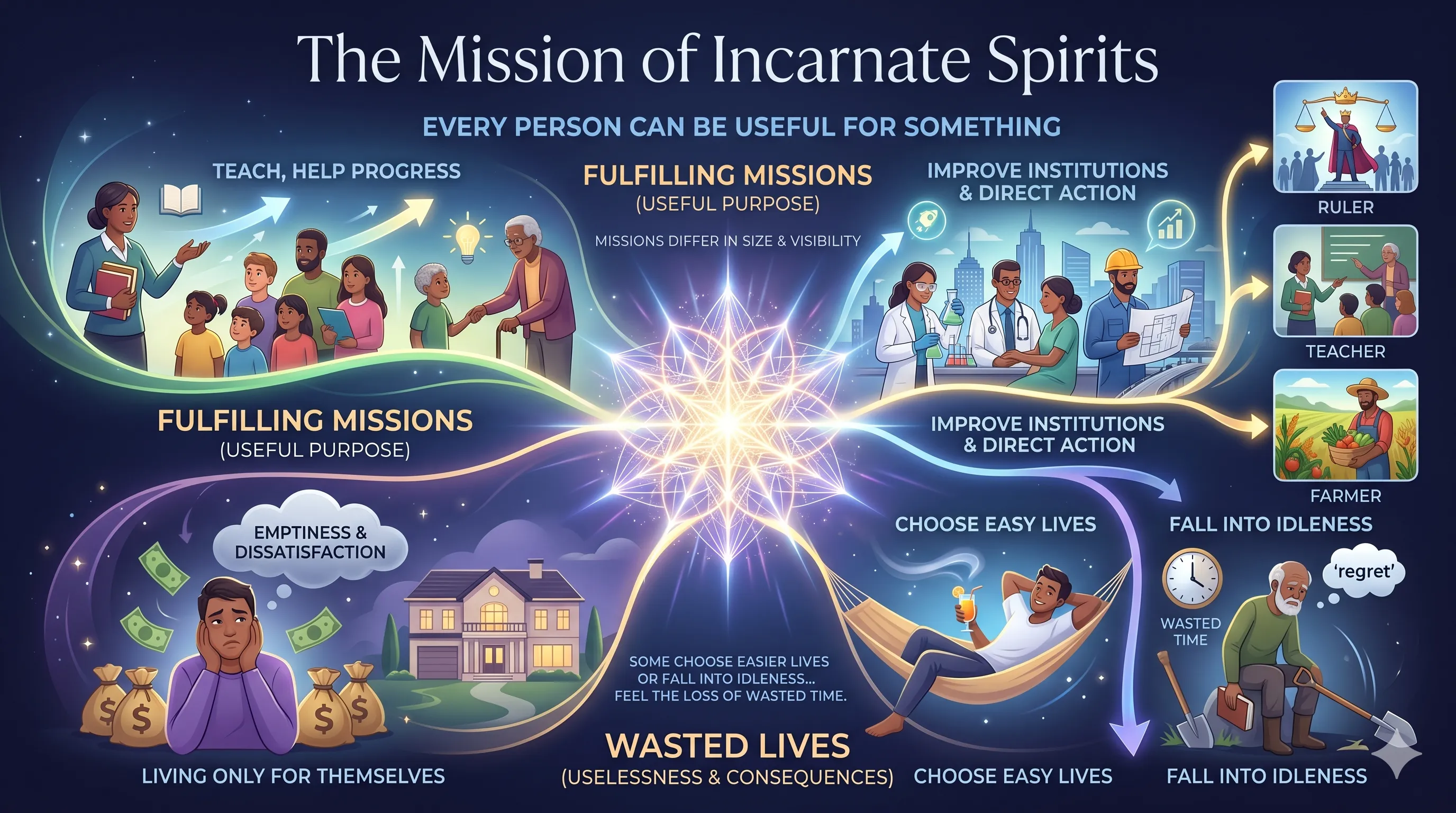
2.10.17 When spirits incarnate, they still serve useful purposes.
2.10.18 Their mission may be to teach, help others progress, or improve institutions through direct action. These missions differ in size and visibility. The ruler, the teacher, and the farmer each fulfill a mission. Every person can be useful for something.
2.10.19 Some, however, make themselves useless by living only for themselves. This brings consequences, often beginning with emptiness and dissatisfaction. Others choose easier lives or fall into idleness after choosing a useful life, and later feel the loss of wasted time.
Recognizing a Mission on Earth
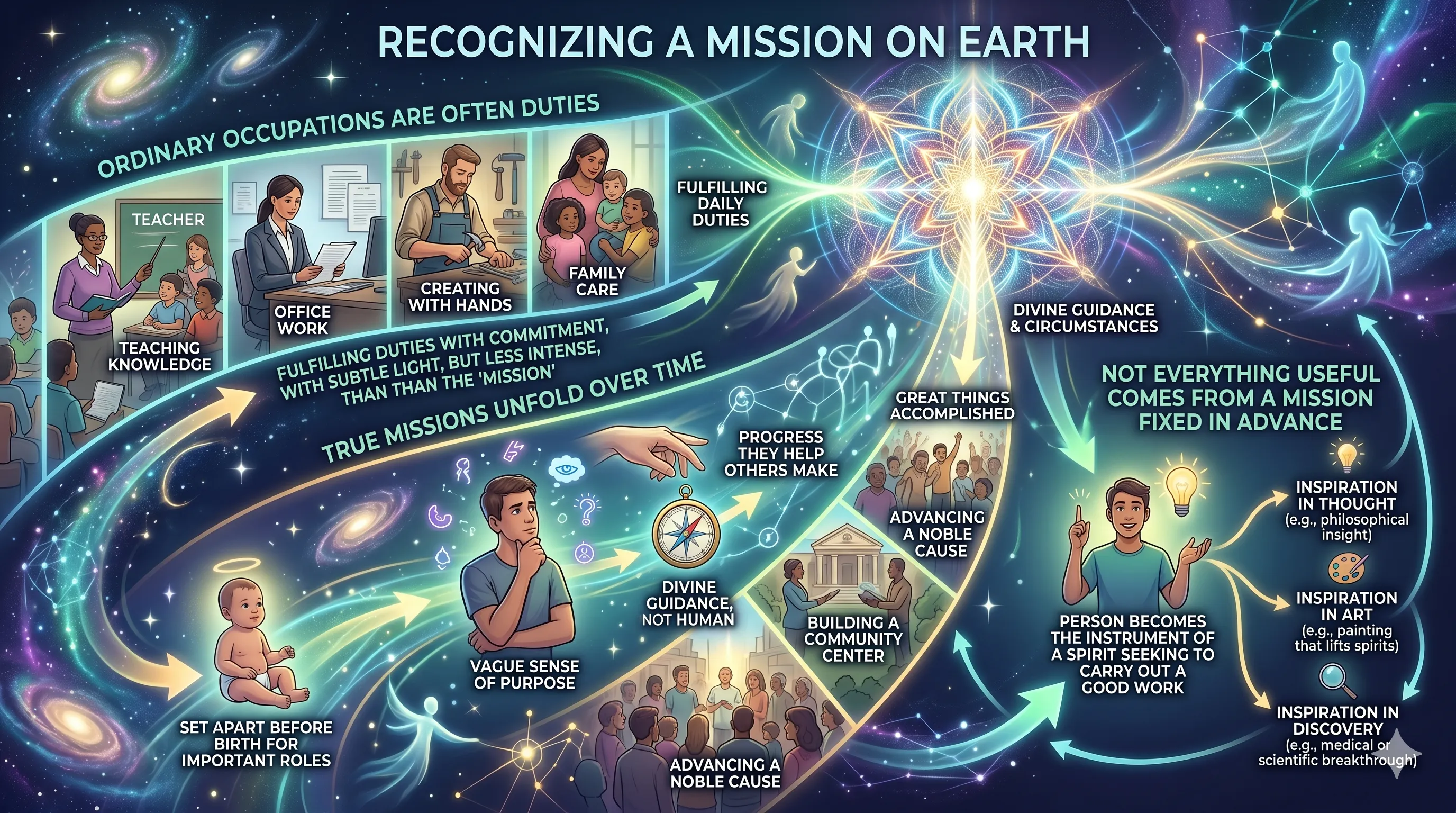
2.10.20 Ordinary occupations are often duties rather than what people usually call a mission.
2.10.21 Still, true missions can be recognized by the great things some people accomplish and by the progress they help others make. Some are set apart before birth for important roles, though once on earth they usually have only a vague sense of their purpose, which unfolds through circumstances and divine guidance.
2.10.22 Not everything useful comes from a mission fixed in advance. A person may also become the instrument of a spirit seeking to carry out a good work, through inspiration in thought, art, or discovery.
Failure in a Mission
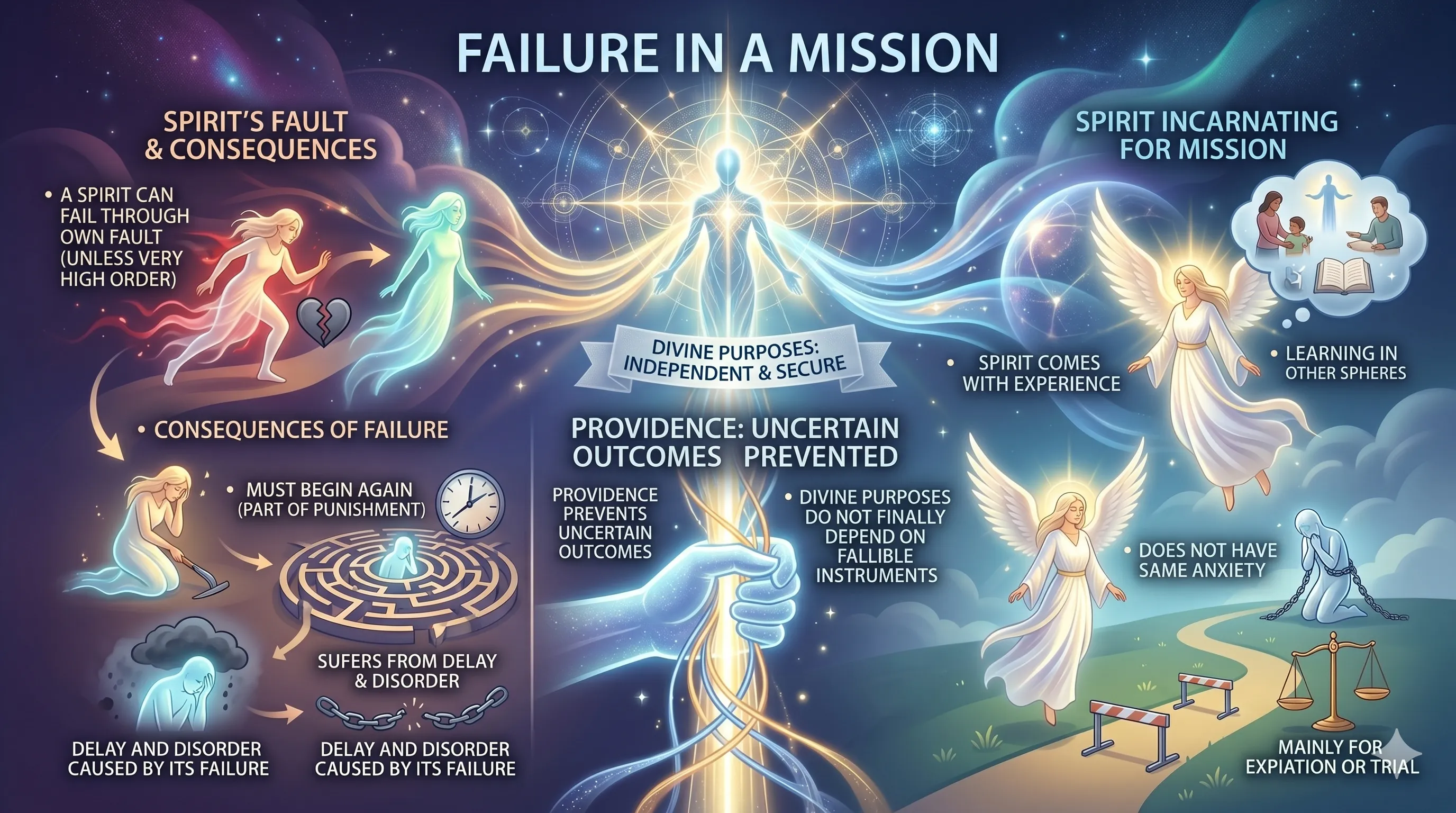
2.10.23 A spirit can fail in its mission through its own fault, unless it belongs to a very high order.
2.10.24 If that happens, it must begin again. This is part of its punishment, and it also suffers from the delay and disorder caused by its failure.
2.10.25 Still, divine purposes do not finally depend on fallible instruments. Providence does not leave important outcomes uncertain. A spirit incarnating for a mission comes with experience and not with the same anxiety as one coming mainly for expiation or trial.
Great Figures, Error, and Historical Limitation
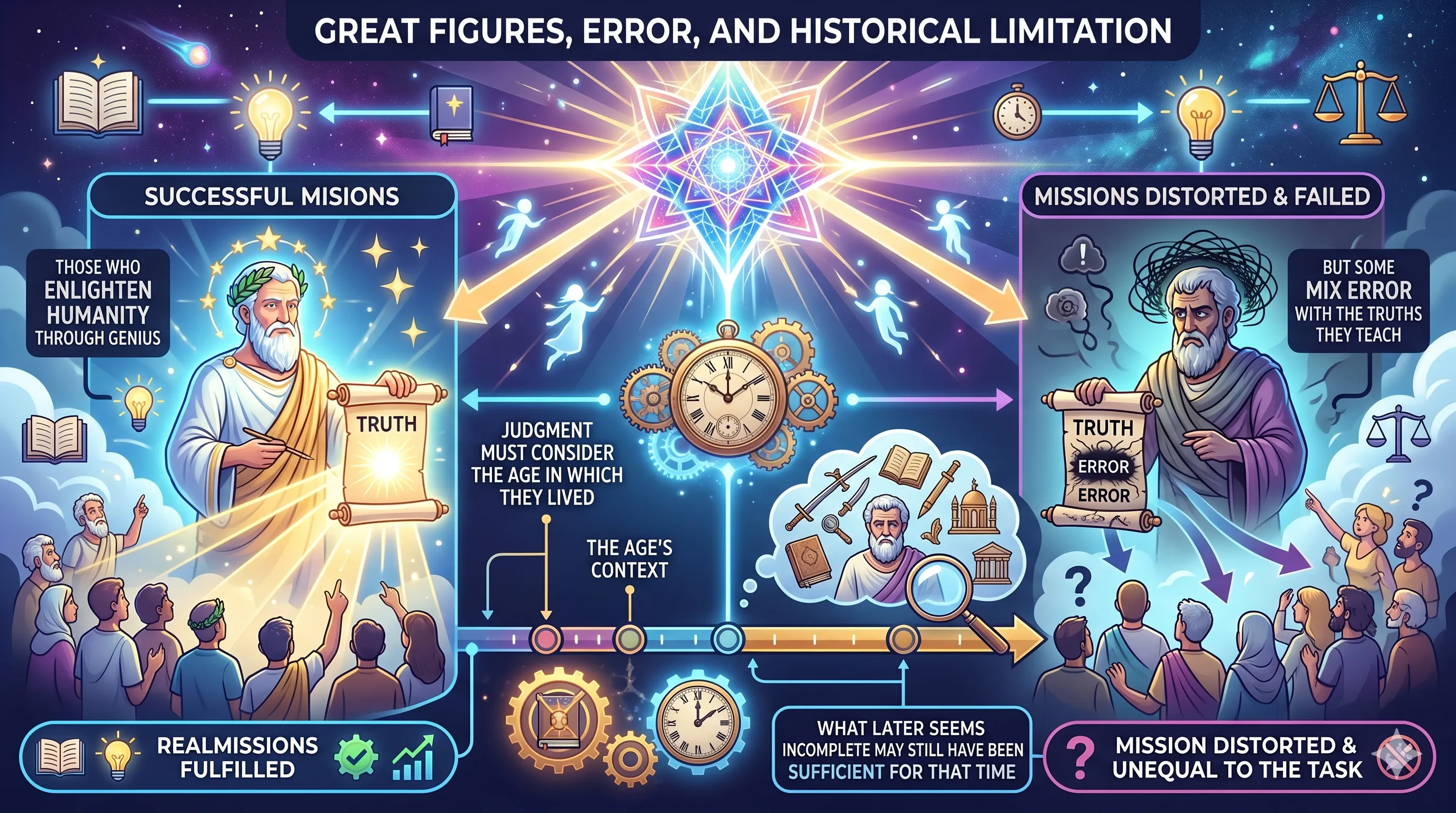
2.10.26 Those who enlighten humanity through genius often do have real missions.
2.10.27 But some mix error with the truths they teach. In such cases, the mission has been distorted by them, and they show themselves unequal to the task. Yet judgment must consider the age in which they lived, since what later seems incomplete may still have been sufficient for that time.
Parenthood as a Mission

2.10.28 Parenthood is truly a mission and a great duty.
2.10.29 Parents bear great responsibility for the future of their children, who are entrusted to them to be guided toward the good. If children go astray through parental neglect, the parents bear responsibility. But if a child goes wrong despite sincere care, the parents are not responsible.
2.10.30 If a child becomes good despite parental negligence or bad example, divine justice gives to each what is deserved.
Conquerors and Instruments of Providence
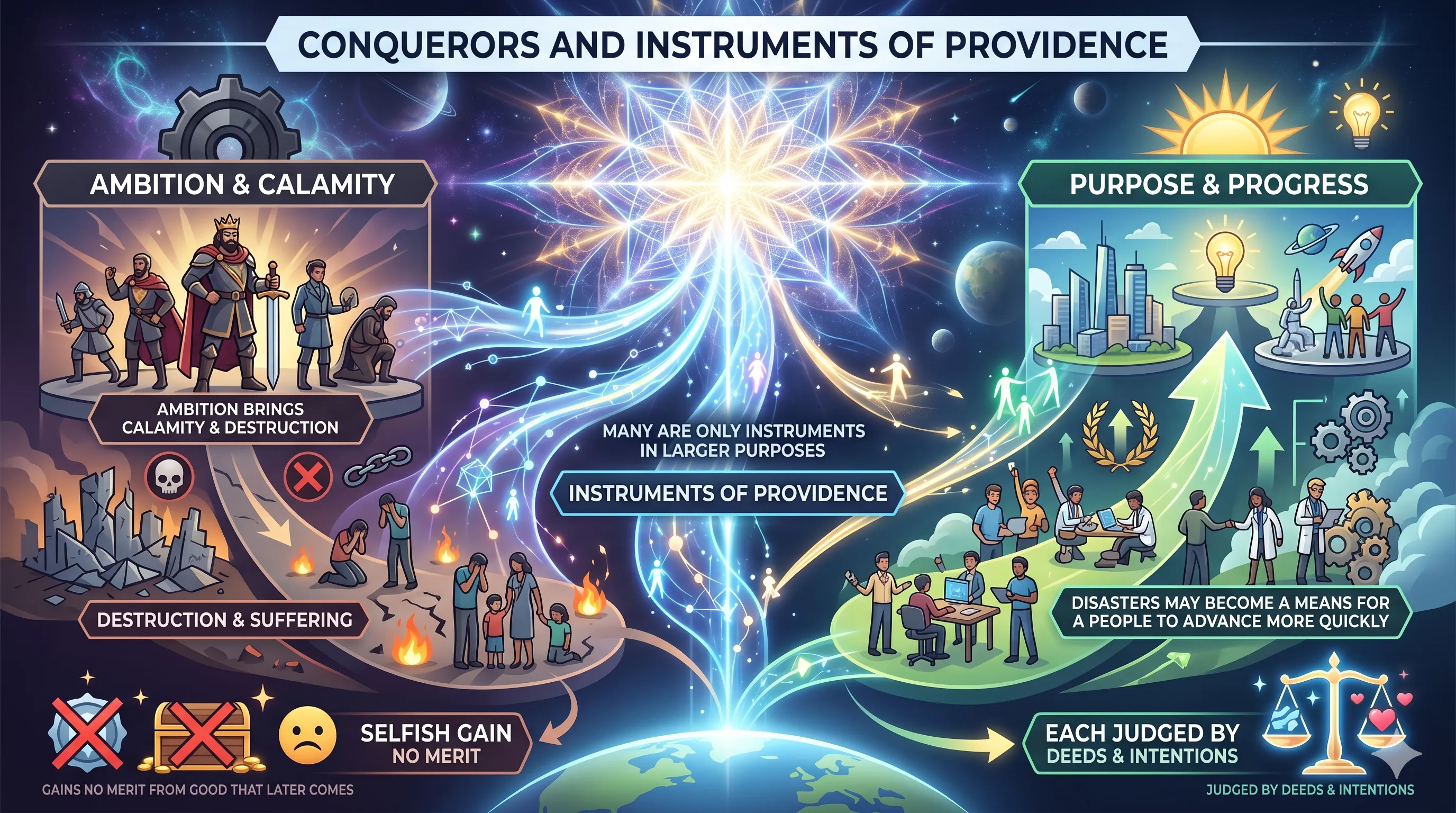
2.10.31 Some historical figures, driven by ambition, bring calamity and destruction.
2.10.32 In many cases they are only instruments in larger purposes, and such disasters may become a means for a people to advance more quickly. But those who cause them for selfish reasons gain no merit from the good that later comes from them. Each is judged by deeds and intentions.
The Range of Spiritual Occupations
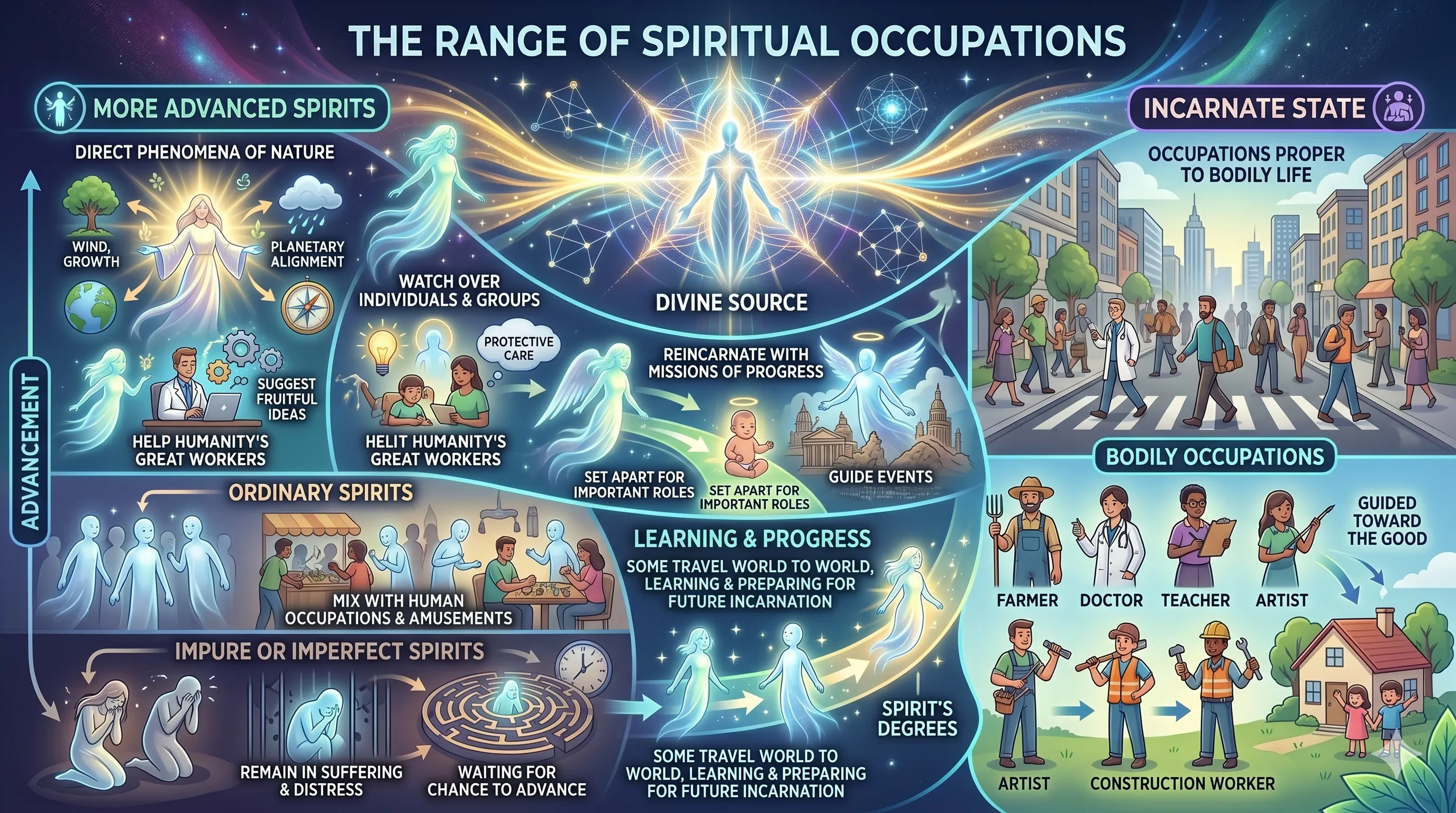
2.10.33 Incarnate spirits have the occupations proper to bodily life. In the errant state, their occupations vary according to their advancement.
2.10.34 Some travel from world to world, learning and preparing for future incarnation. More advanced spirits guide events, suggest fruitful ideas, help humanity’s great workers, reincarnate with missions of progress, watch over individuals and groups, or direct the phenomena of nature.
2.10.35 Ordinary spirits mix with human occupations and amusements. Impure or imperfect spirits remain in suffering and distress, waiting for the chance to advance.